
Mesh sags or pops out
Check whether spline is pulling out or the frame itself is loose.
DIY PROJECT FINDER
Start with what is happening, not with a product. Choose a window screen, blind or door problem and follow a focused guide and calculator. No account or personal data required.
 Window screensMesh, spline, frame fit and bends →
 Window blindsInside and outside mounting →
 Door gaps & draftsBottom and perimeter air leaks →
 Window glass & trimCondensation, sealing & water paths →
Window screens
Choose the closest observable symptom, then use the specific guide before buying parts or attempting adjustments.
Check whether spline is pulling out or the frame itself is loose.
Choose an adhesive fiberglass patch or hooked metal method for the actual screen fabric.
Inspect screen orientation and roller seating before adjusting the receiver.
Separate old-frame measurements from opening dimensions and retention hardware.
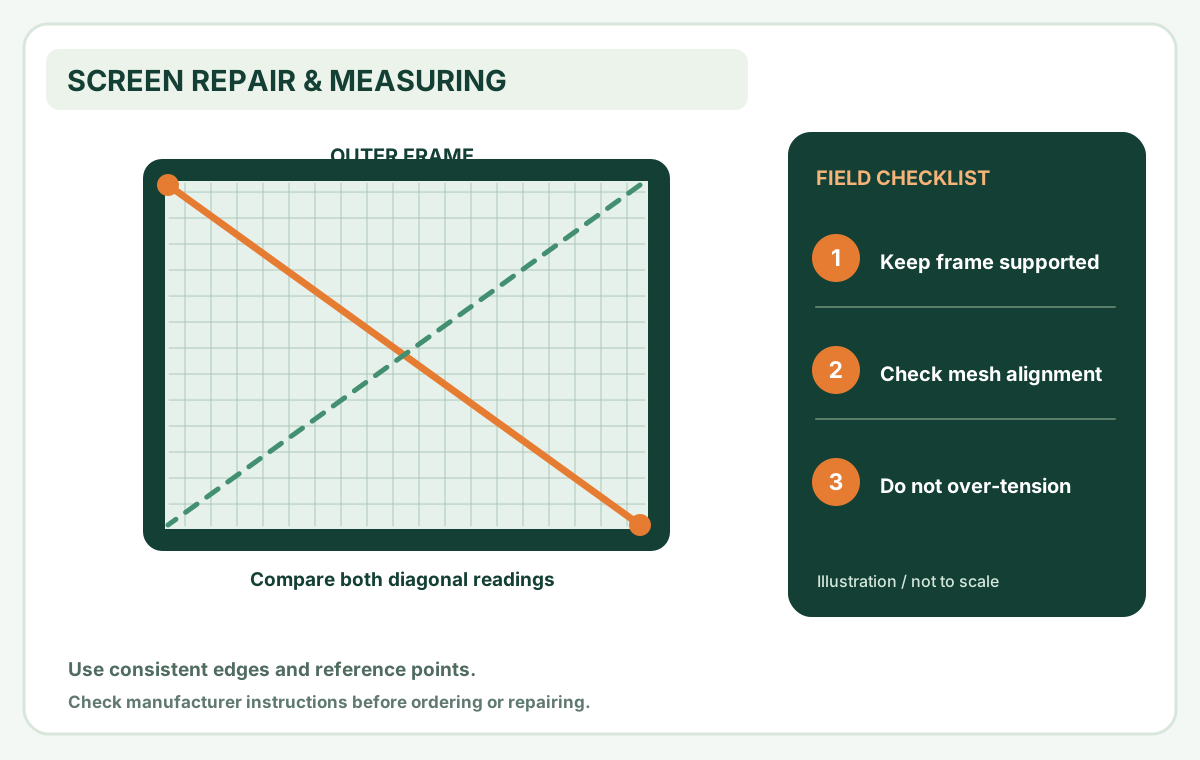
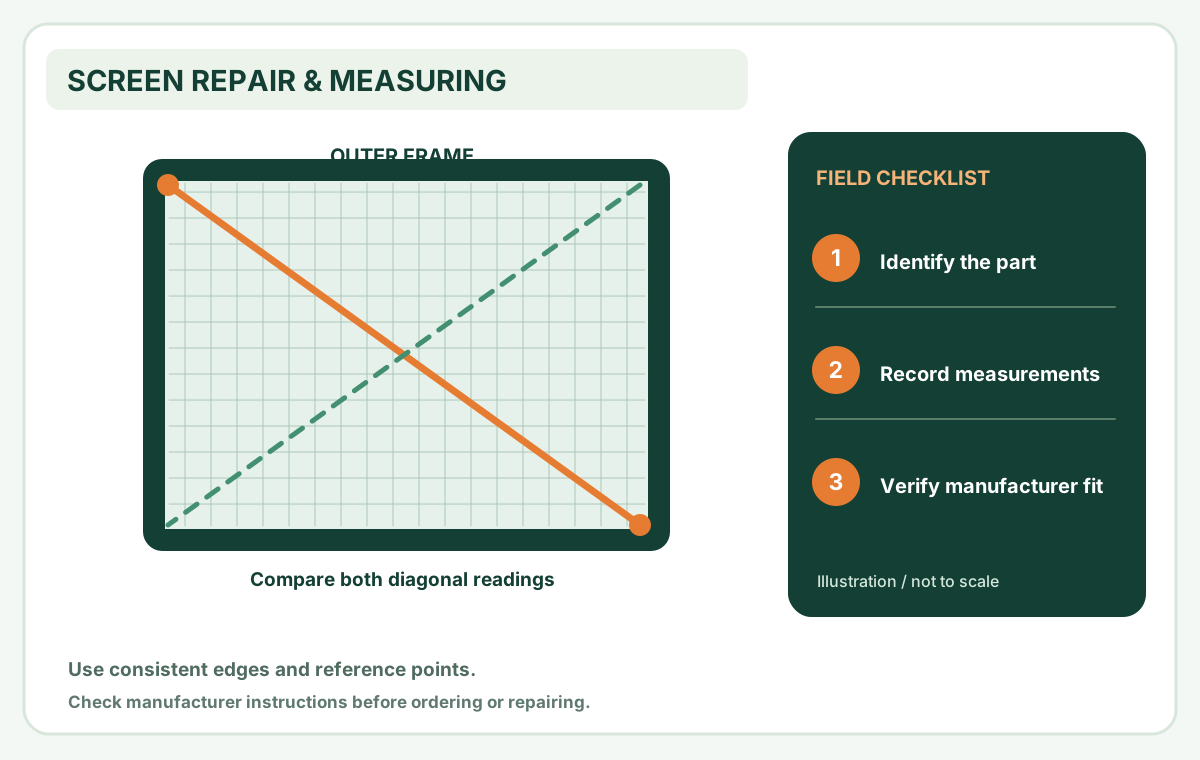
Compare both diagonals and inspect corners before stretching new mesh.
Check the frame groove and exact material before choosing a diameter.
Clean the guide, then identify a lower wheel versus top-hung glide.
Photograph the entire wheel housing and match your manufacturer series.
Identify your door series or compare the intact rigid frame before ordering a screen.
Check panel frame condition, compatible roll width and spline before rescreening.
Check the spring, receiving hole and cap; do not drill by guessing.
Window blinds
Choose the closest observable symptom, then use the specific guide before buying parts or attempting adjustments.
Keep all six readings; verify the exact SKU, not one universal deduction rule.
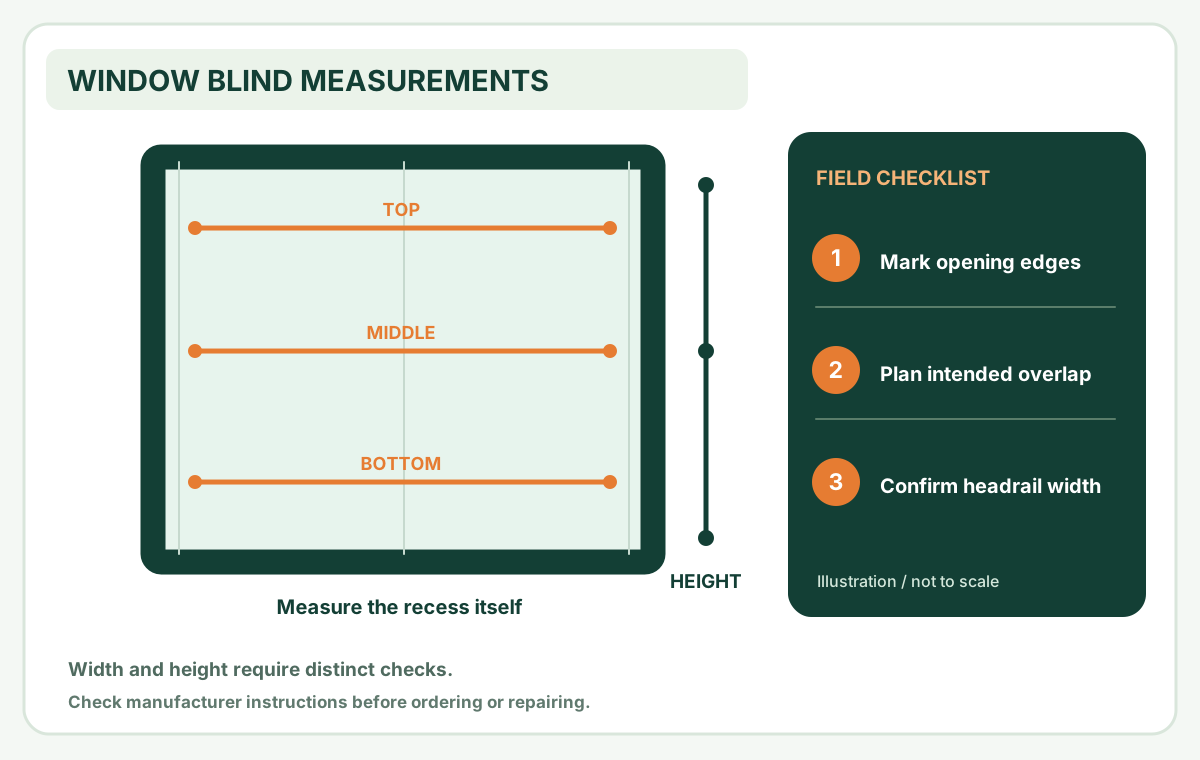
Check available bracket space, overlap and finished fabric versus headrail width.
Separate tilt from traverse motion; keep child-safety devices intact.
Match the hanger style and installed drop before ordering replacement vanes.
Identify spring, clutch/chain, cordless or motorized controls before any adjustment.
Check bracket support and model-approved reset guidance; never open a spring drive.
Compare rail positions and check the correct model before touching lift components.
Identify top-down/bottom-up or Day & Night midrail position before copying a one-rail reset.
Distinguish intended fabric width from the complete bracket/cassette order width.
Door gaps & drafts
Choose the closest observable symptom, then use the specific guide before buying parts or attempting adjustments.
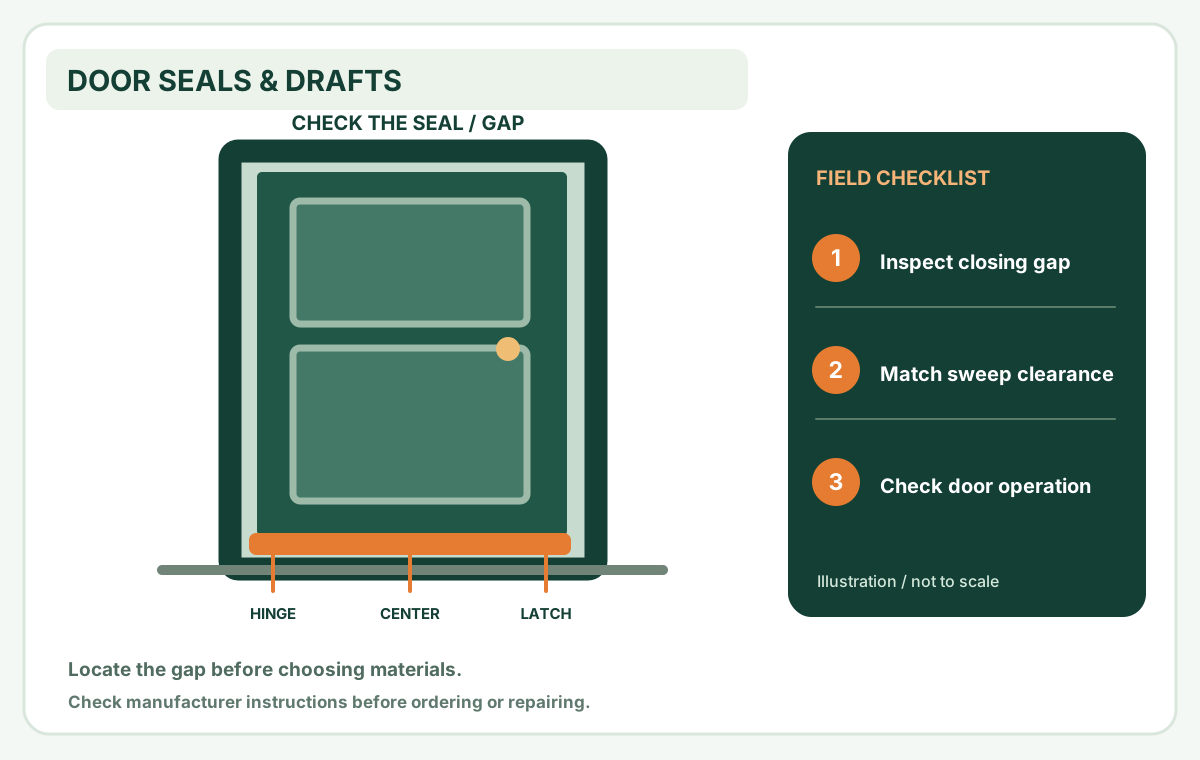
Measure closed-door clearance at hinge, middle and latch positions.
Find the actual leak path before buying perimeter weatherstripping.
Check door-bottom contact, threshold profile and sweep working clearance.
Check weatherstrip-to-sill corner pads separately from under-sill water entry.
Identify a genuine adjustable cap; never turn an unknown anchor screw.
Inspect hinge attachment and three reveal gaps before adding thicker seals.
Window glass & trim
Choose the closest observable symptom, then use the specific guide before buying parts or attempting adjustments.
Find whether moisture is on the indoor face, outdoor face or between panes before replacing glass.
Only seal a verified stationary joint; inspect moisture and keep designed drainage open.