FIND THE RIGHT GUIDE

Search MendNook

Enter a topic to find relevant guides and tools.

PROJECT DIRECTORY

Choose your home repair project

Work from the symptom to a safe measurement, then check fit before purchasing parts. Pick a learning path with a clear end goal.

A five-minute project plan before you begin

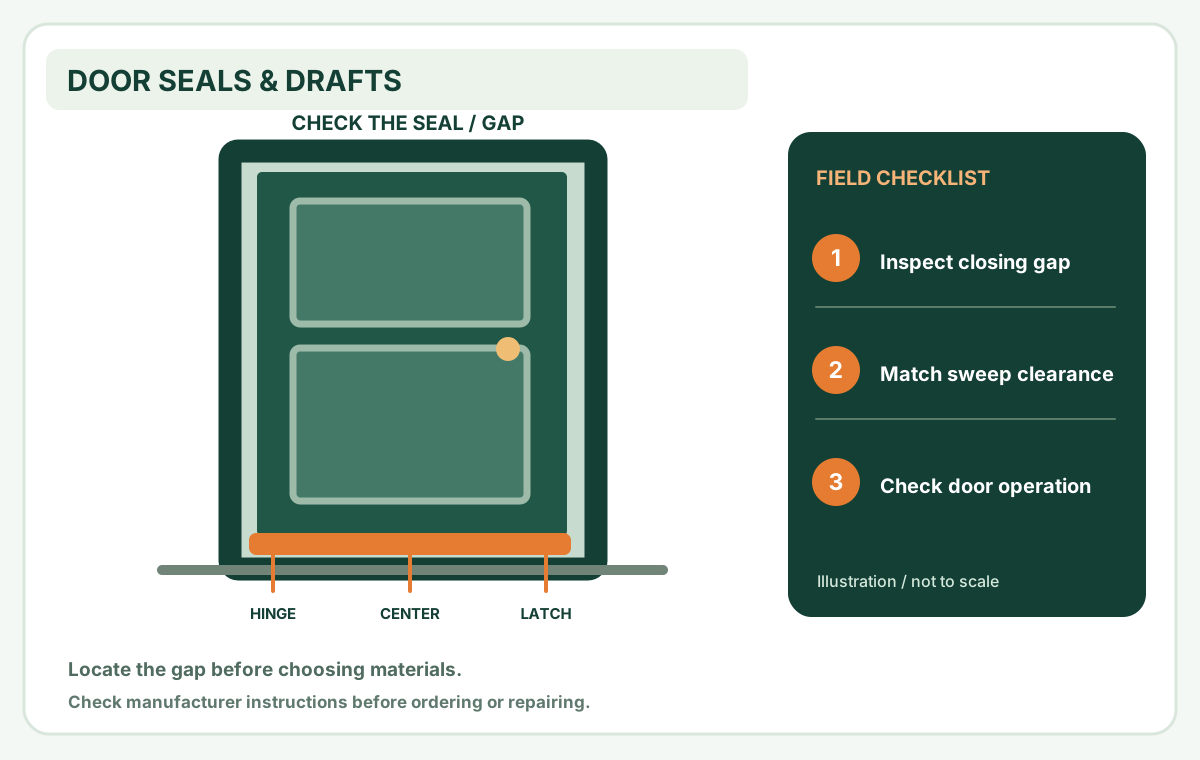
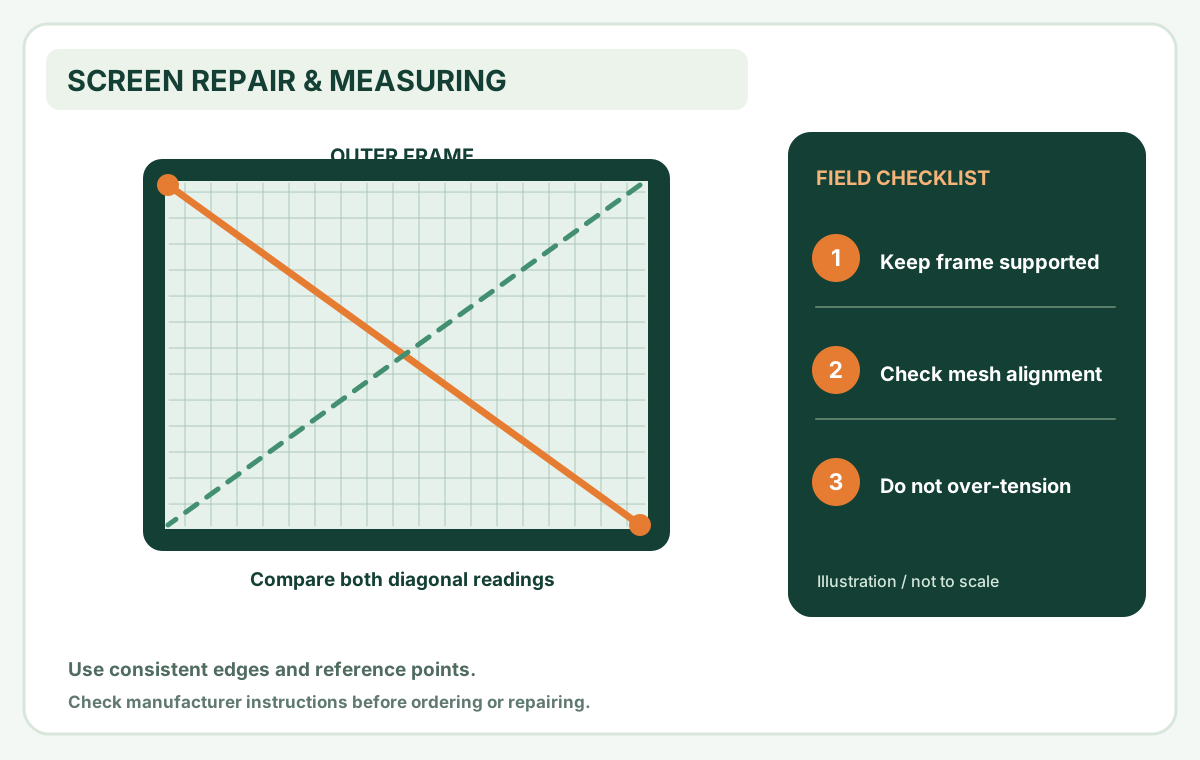
Start by separating the symptom from its cause. Loose screen mesh may need fresh spline; a screen that will not sit squarely in its track may have a frame or retainer problem instead. A draft at the bottom of a door needs a different seal than air entering around the jamb. Check the diagnosis page before ordering anything.

  1. Document: photograph the existing frame, seal or headrail from the front and side, including its fasteners or grooves. Label the room or opening.
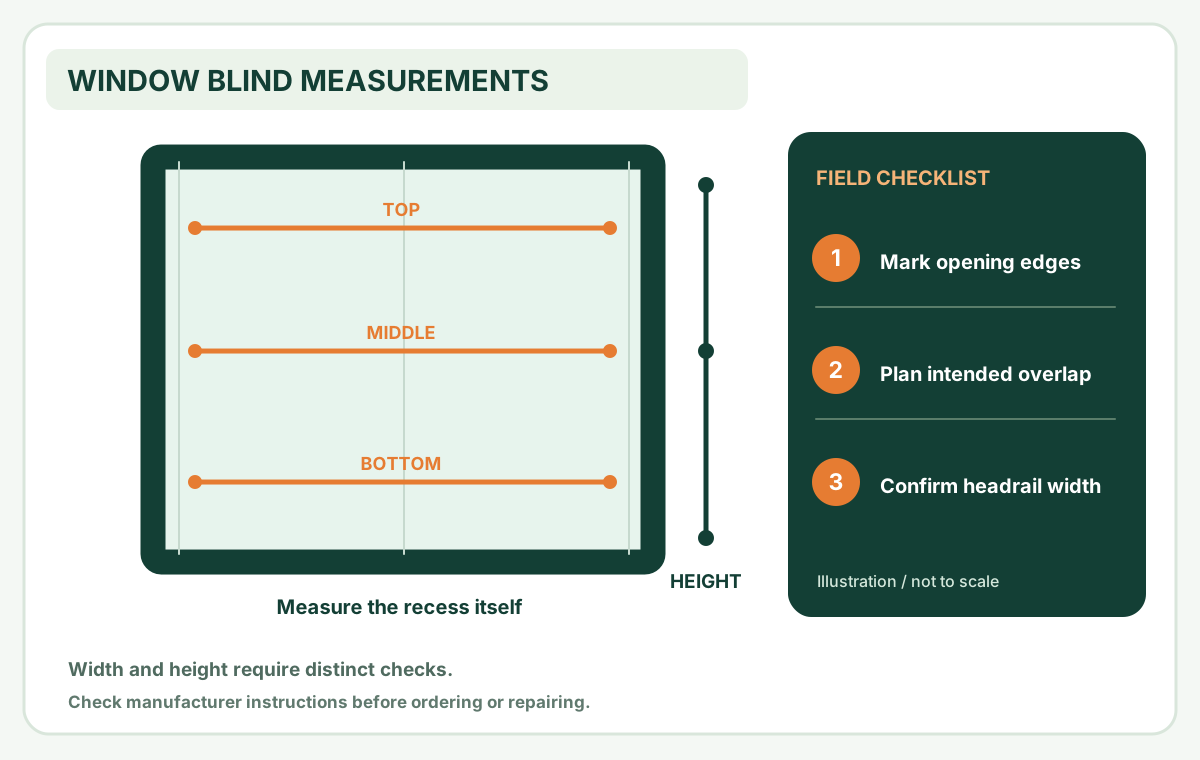
  2. Measure: take at least two readings with the same reference points; write down units, hardware clearances and whether dimensions describe a frame, opening, recess or finished covering.
  3. Verify: read the exact manufacturer instructions for the specific screen hardware, blind model or seal profile before translating measurements into an order size.
  4. Estimate: use the related free calculator for approximate material quantities only; include realistic waste and trimming allowances.
  5. Check safety: stop if glass is cracked, the opening is above safe reach, hardware is unstable, or structural movement might be involved.

For a reusable record, open the printable measurement worksheet. If the decision is still unclear, start with Find a Fix rather than guessing a replacement part.

Before buying parts

Manufacturer instructions take precedence over general estimates. Photograph the mounting profile, record exact dimensions and check hardware clearance. For sharp glass, elevated openings, an unstable door or structural damage, stop and contact a qualified professional.

Our diagrams and AI-generated scenes are educational illustrations, not evidence of completed MendNook installations. Read our research and corrections policy.