
PROJECT LEARNING PATH
Exterior Door Drafts, Sweeps & Weatherstripping Hub
Diagnose common exterior door drafts, compare bottom gaps, and measure replacement weatherstripping without blocking door operation.
A draft at an exterior door is not always caused by worn weatherstripping. A door that has dropped on its hinges, a distorted threshold, a latch that fails to pull the slab against its seal or a damaged jamb can all produce a similar cold-air symptom.
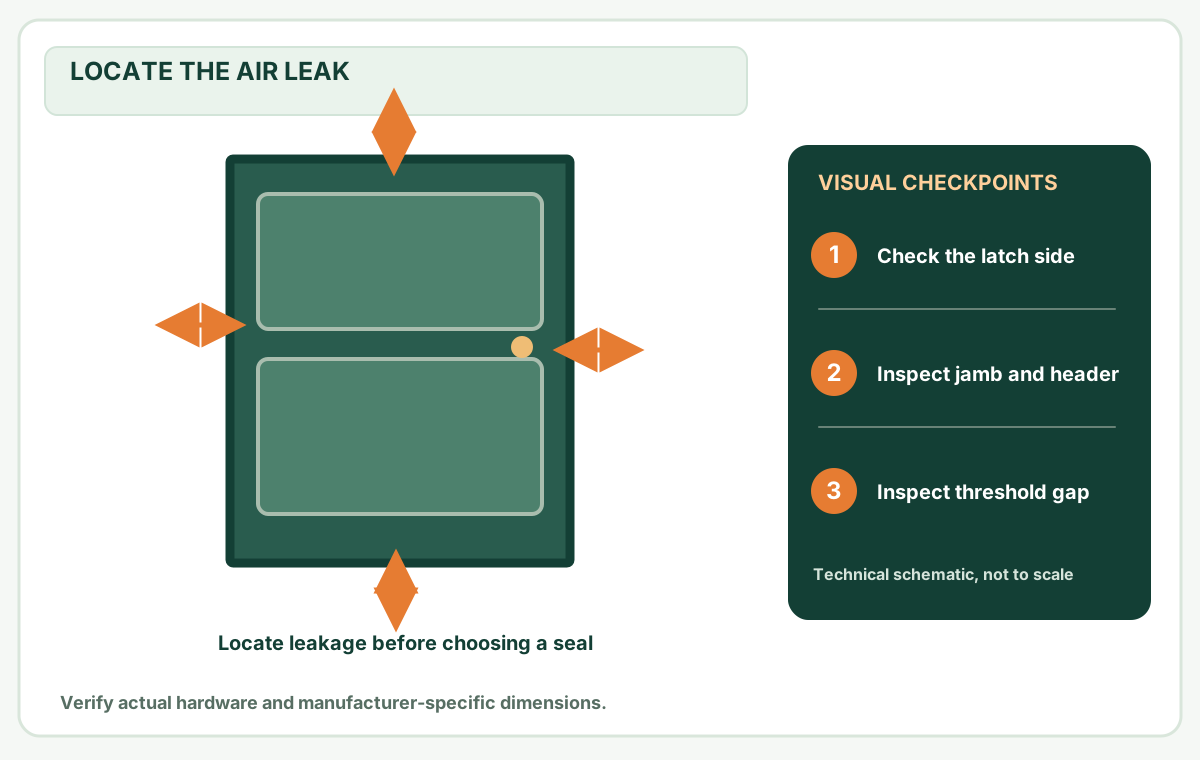
This hub walks through diagnosis first, measurement second, replacement last. Our tools help document physical dimensions, but they cannot determine whether a fire-rated or specialty door assembly permits a given seal profile. Avoid any alteration that prevents a door from closing, latching or functioning as a safe exit.
Repair the door geometry before adding more gasket
A gap around an exterior entry door can originate in hinge alignment, threshold contact, corner-pad continuity or worn weatherstrip. These faults require different repairs. A thick sweep or foam strip should not be used to hide door hardware that no longer aligns or to make a lock difficult to operate.
On a narrow screen, scroll this table sideways to see every column.
| What you can verify | Best next guide | Why it changes the repair |
|---|---|---|
| Door leaf drops toward the latch side or rubs at a corner | Sagging entry-door hinge gaps | Check reveal and hinge anchoring before weatherstrip |
| Bottom contact differs at hinge, middle and latch positions | Adjust an exterior door threshold | First identify whether the sill cap is actually adjustable |
| Leak/draft at the lower jamb-to-sill junction | Exterior door corner seal pads | An inswing-specific pad differs from a general door sweep |
| Kerf-style perimeter weatherstrip is torn or flattened | Replace kerf door weatherstripping | Match fin profile, compression face and original jamb slot |
| Only a genuine bottom gap remains with sound door geometry | Install an exterior sweep | Verify the complete swing and normal latch operation |
Use the door gap checker to record multiple locations. Stop if the sill has water damage, the door is fire-rated, the lock cannot engage safely or the frame has visibly shifted. A measurement worksheet documents the decision; it cannot certify a rated assembly.
Choose the repair by the actual failure, not by the draft alone
A seal length calculator can tell you how much material to buy. It cannot tell you whether installing it will allow the door to close and latch. The U.S. Department of Energy's exterior-door weatherstripping job aid prioritizes air sealing while preserving door operation.
On a narrow screen, scroll this table sideways to see every column.
| What you find before shopping | What to check next | What not to do |
|---|---|---|
| Bottom gap varies substantially across the threshold | Measure hinge/center/latch clearances and check threshold slope or door alignment | Assume a fixed-height sweep seals both ends |
| Door rubs, drags or will not latch | Examine hinge sag, strike alignment and threshold clearance | Add a thicker gasket to force a fit |
| Draft follows a vertical jamb | Inspect old seal cross-section and existing retainer | Buy by length alone without checking profile |
| Fire-rated, emergency-exit or special assembly | Find the approved door/assembly documentation | Substitute an unapproved seal or impair egress |
Do not claim savings, air-leak percentages or weatherstrip compatibility from dimensions alone. The perimeter estimator produces only a purchasing-length estimate.
Door sweep versus perimeter weatherstripping
The door sweep versus weatherstripping decision guide includes a symptom-to-part matrix and shows why a draft beside the latch usually needs a different inspection than a draft below the door. It separates threshold damage from simple seal wear and includes three checkable measuring examples.
Diagnose before buying materials
On a narrow screen, scroll this table sideways to see every column.
| Observation | Possible area to inspect | Next measurement |
|---|---|---|
| Visible daylight below the slab | Door bottom gap diagnosis | Hinge, center and latch-side clearance |
| Air around top corner | Locate the draft source | Header seal, latch contact and alignment |
| Draft on one vertical jamb | Measure weatherstripping length | Existing gasket profile and jamb run |
| Door rubs as you close it | Compare sweep styles and fit limits | Stop and confirm manufacturer fit before adding material |
Record the three dimensions that matter
Bottom gap: with the door closed, use a safe view of the clearance at the hinge side, center and latch side relative to the same threshold surface. Record the smallest and largest. If they vary, a fixed-height sweep may contact at one end and leave a gap at the other.
Door width and swing: measure the bottom edge width and note whether the door opens inward or outward. Hardware that works on one door may conflict with a threshold or floor covering on another.
Perimeter seal run: measure the top, hinge-side jamb and latch-side jamb separately. Keep the bottom seal separate unless the product maker explicitly calls for the same material. Account for cut losses, but never assume that a shopping allowance is a required compression or joint gap.
A practical buying sequence
- Close and latch the door. Identify the area of air movement, and inspect for obvious physical damage.
- Record threshold type, existing seal cross-section, door material and any rubbing.
- Measure actual gaps and seal paths at more than one point, keeping units consistent.
- Compare with the published compression or working-gap range of the intended product. A roll's length alone does not demonstrate compatibility.
- For rated, security, commercial or emergency-exit doors, consult the assembly manufacturer or a qualified professional rather than substituting unapproved seals.
- After installation according to the approved instructions, make sure the door still closes and latches normally without binding.
Example: calculate the side and top run
A 36-inch head section plus two 80-inch jambs equals 196 inches, or about 16.33 feet of perimeter run. If you choose a 10% shopping allowance, the estimate is approximately 17.97 feet. The actual purchase length and appropriate joints still depend on how the manufacturer sells and installs the product.
Use the door bottom gap checker to compare readings, weatherstrip length calculator for the perimeter and printable project worksheet to keep a record.
Primary source: correct seal fit and safe operation
The U.S. Department of Energy's 2024 exterior-door weatherstripping job aid emphasizes reducing air infiltration without impairing door operation. Its job aid is a general reference, not approval to modify every rated or manufactured door assembly. If seals interfere with latching or if the doorframe is damaged, stop and obtain appropriate advice.
Repair decisions by country: US weatherstripping, Canada air sealing, UK draught-proofing
The same door can leak at a gasket, bottom sweep, threshold, letterbox, or frame joint. Translate the symptom into a material choice only after measurement. These country-specific official sources are useful starting points, not interchangeable construction codes.
On a narrow screen, scroll this table sideways to see every column.
| Where the project is | Local search vocabulary | Primary public guidance | First useful step |
|---|---|---|---|
| United States | exterior door weatherstripping, door sweep, kerf seal | U.S. DOE weatherstripping installer job aid | Check door operation and the actual gap before choosing a seal |
| Canada | door weatherstripping, air sealing, coupe-froid | Natural Resources Canada: air-leakage control | Inspect cold-weather seal behavior, indoor moisture and exact gasket cross-section |
| United Kingdom | draught-proofing, door brush strip, letterbox brush, draught excluder | Energy Saving Trust: draught-proofing | Separate the letterbox and keyhole from the jamb and bottom gap |
Important ventilation boundary: purposeful air vents, trickle ventilators and combustion-air supplies are not accidental draughts. England publishes an existing-home ventilation guide, but regulations differ across UK nations, Canada and US states. Do not block life-safety or fresh-air paths.
Try the five-zone draft-finding guide, then use the region-aware length and roll calculator to compare material quantities in inches or millimetres. A length result cannot approve a seal profile or product.
GUIDES BY PROJECT
Continue with a specific task
Open the guide that matches your measurement or repair problem.
Illustrative imageDoor sealsFind an Exterior Door Draft: A No-Guessing Diagnosis
Locate exterior-door drafts at the threshold, jamb, latch and wall joint before buying seals. A five-zone test, examples, measurement record and safe stopping points.
Read guide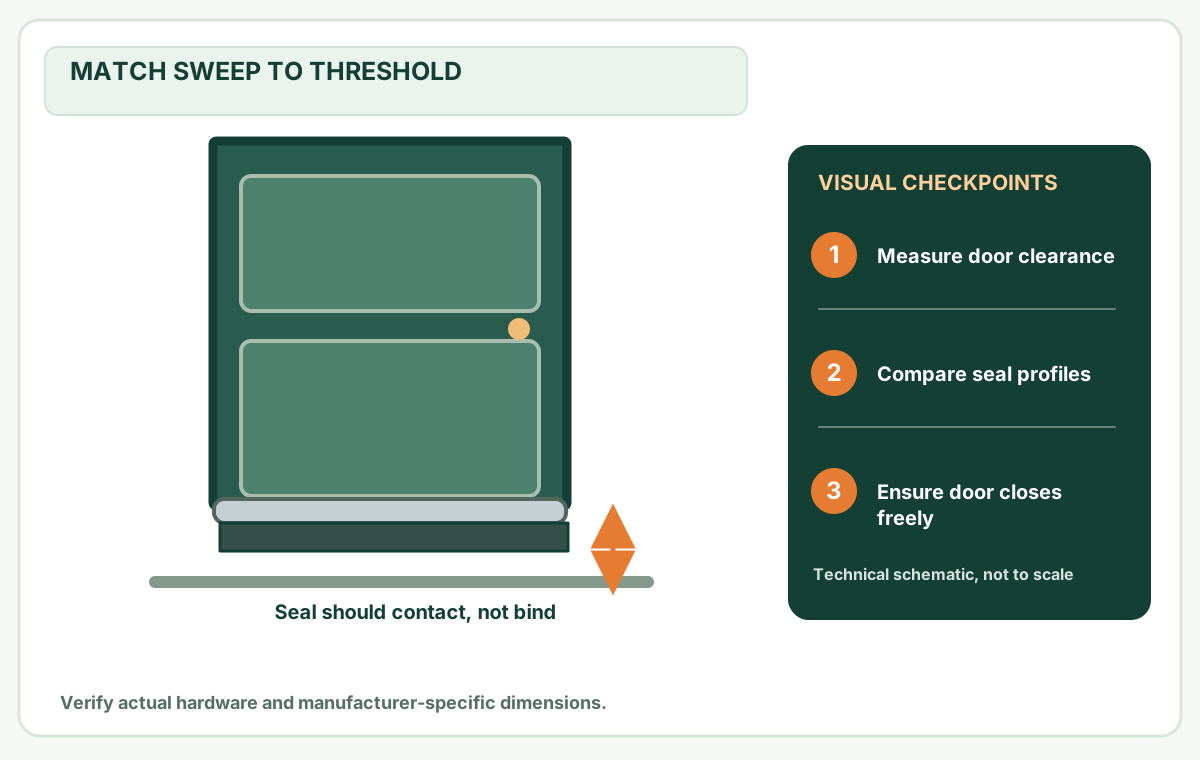 Illustrative imageDoor seals
Which Door Sweep Fits? Compare Bottom Seals and Thresholds
Choose a compatible exterior door sweep by identifying factory gaskets, door swing, sill type and three bottom gaps. Includes manufacturer-specific examples and a post-fit check.
Read guide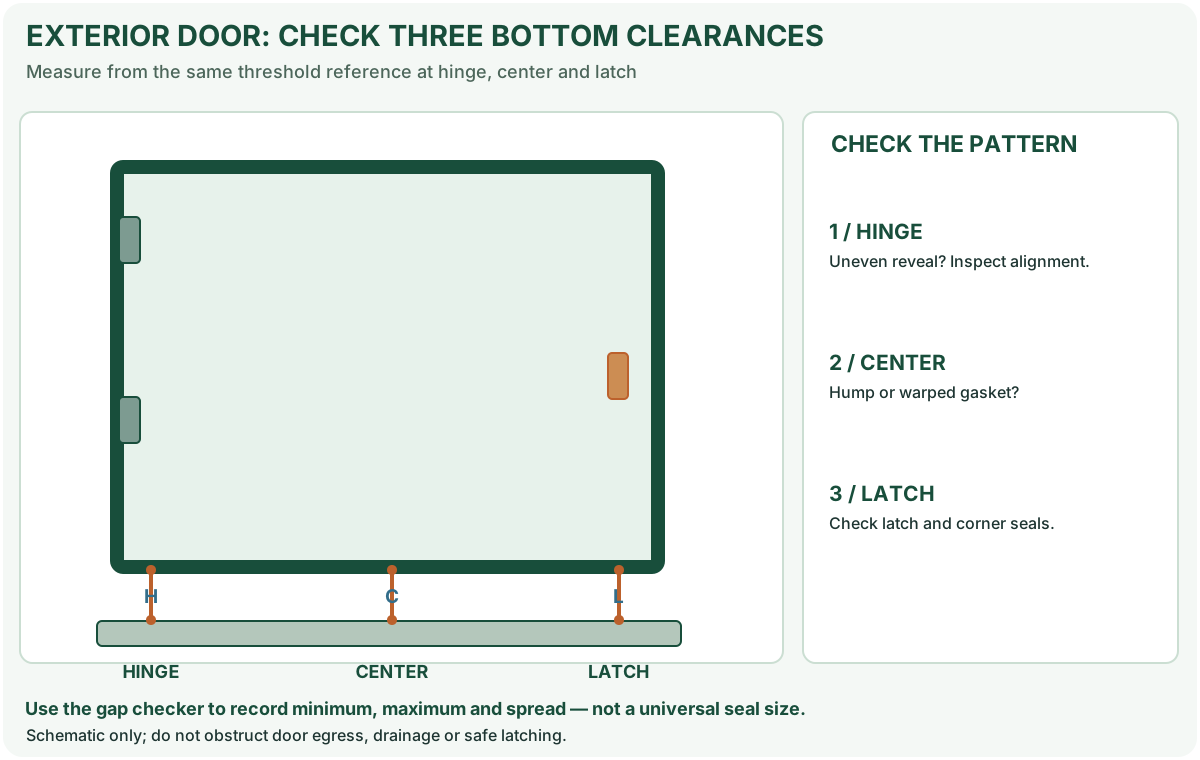 Illustrative imageDoor seals
Measure a Door Bottom Gap Before Choosing a Sweep
Measure the hinge, centre and latch clearances to one threshold reference, check door swing and existing seals, and avoid buying a sweep from one misleading number.
Read guide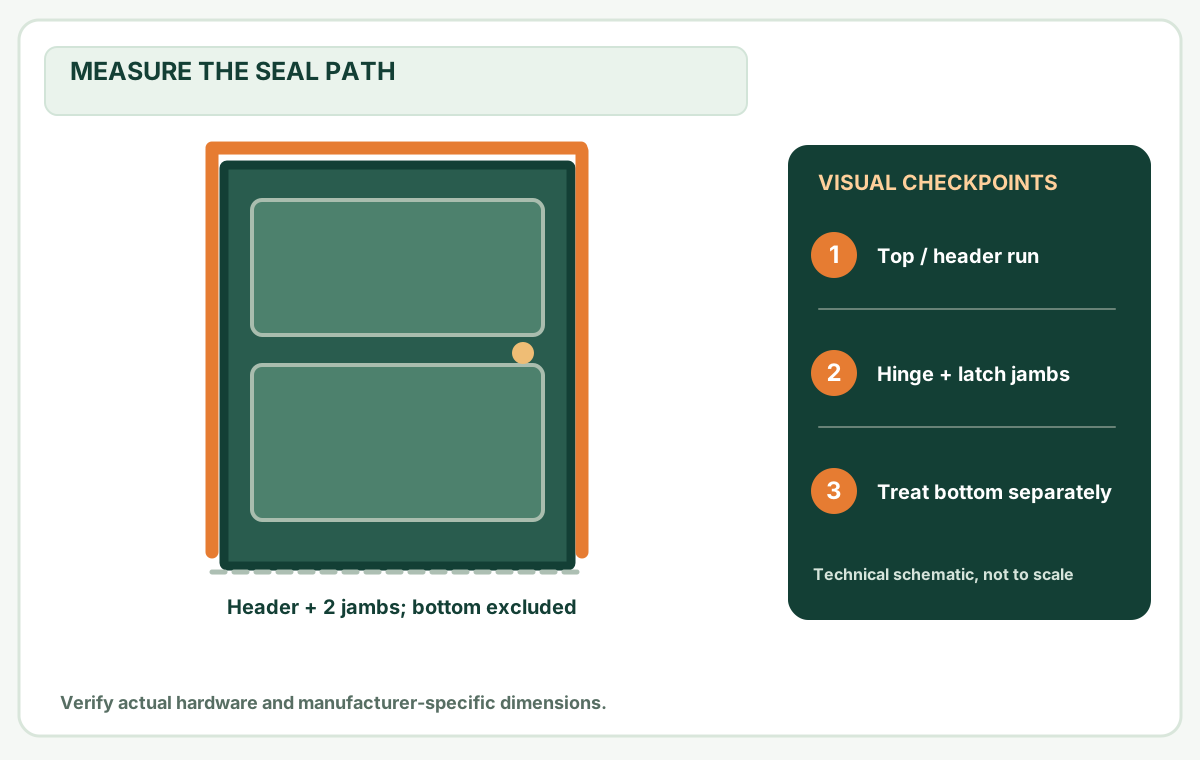 Illustrative imageDoor seals
How Much Door Weatherstripping? Measure Three Runs and Plan Cuts
Measure the head and both jambs as separate runs, distinguish a door sweep from a perimeter gasket, and plan continuous roll cuts without wasteful splices.
Read guide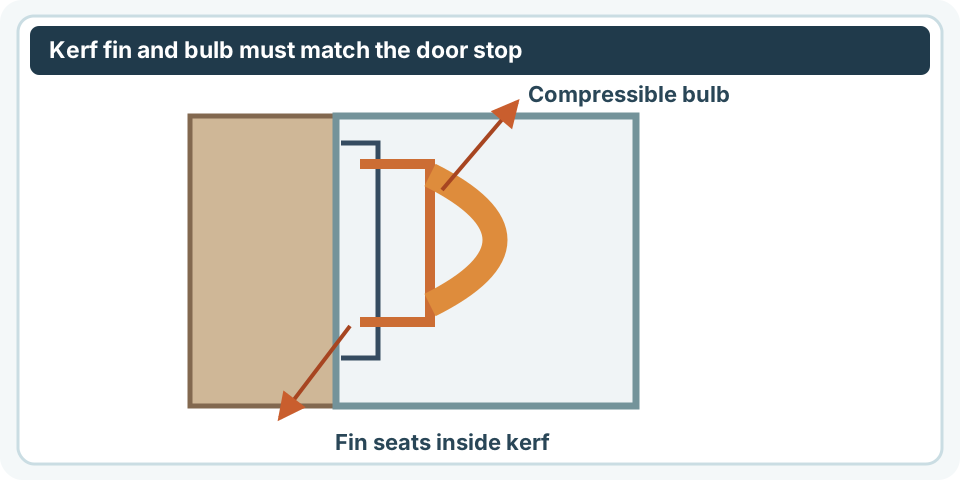 Illustrative imageDoor weatherstripping
Replace Kerf Door Weatherstripping: Match the Seal Profile
Find the correct push-in door-jamb kerf seal, measure each side, remove the old strip safely and verify latch closure without excess compression.
Read guide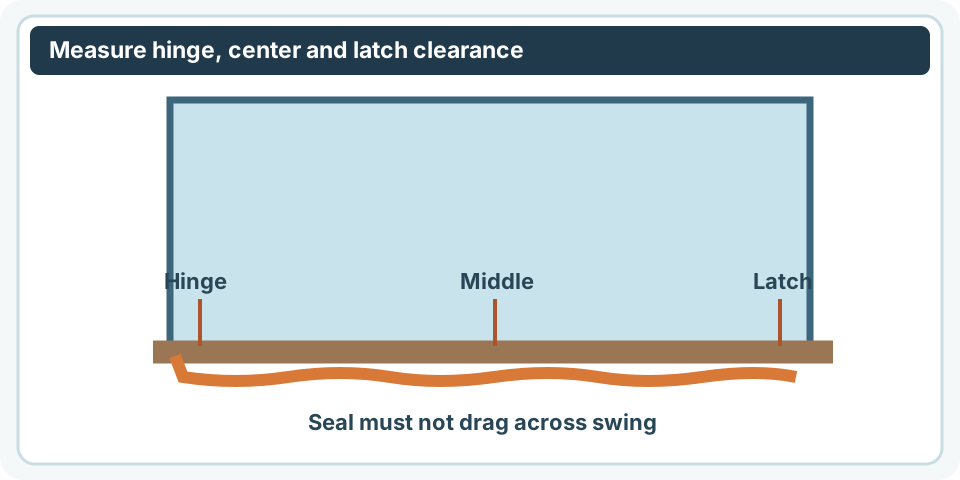 Illustrative imageDoor weatherstripping
Install an Exterior Door Sweep Without Dragging or Blocking the Latch
A stepwise exterior-door sweep installation decision: identify the old seal, measure three sill gaps, dry-fit a compatible sweep and check the full swing and latch after fitting.
Read guide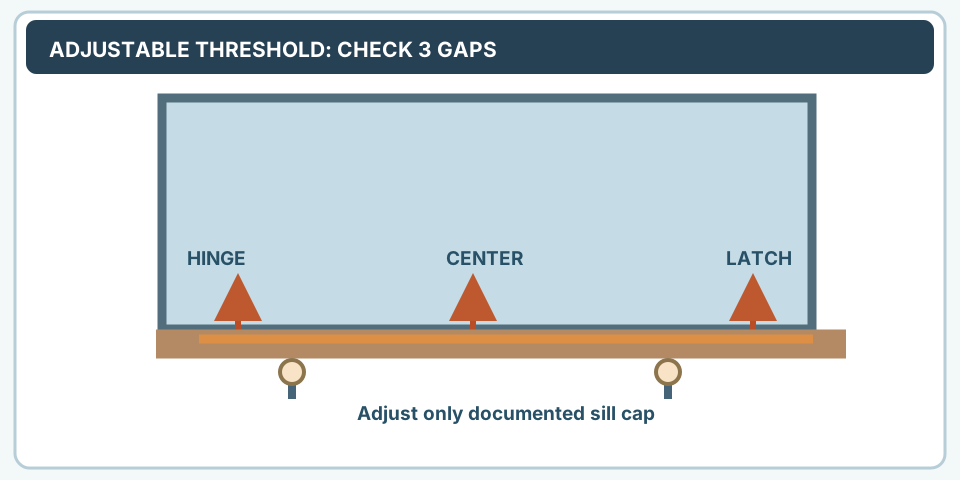 Illustrative imageDoor weatherstripping
Adjust an Exterior Door Threshold: Stop Drafts Without Jamming the Door
Identify adjustable vs fixed thresholds, diagnose uneven door-bottom contact and verify seal, latch and drainage before adjusting a sill cap.
Read guide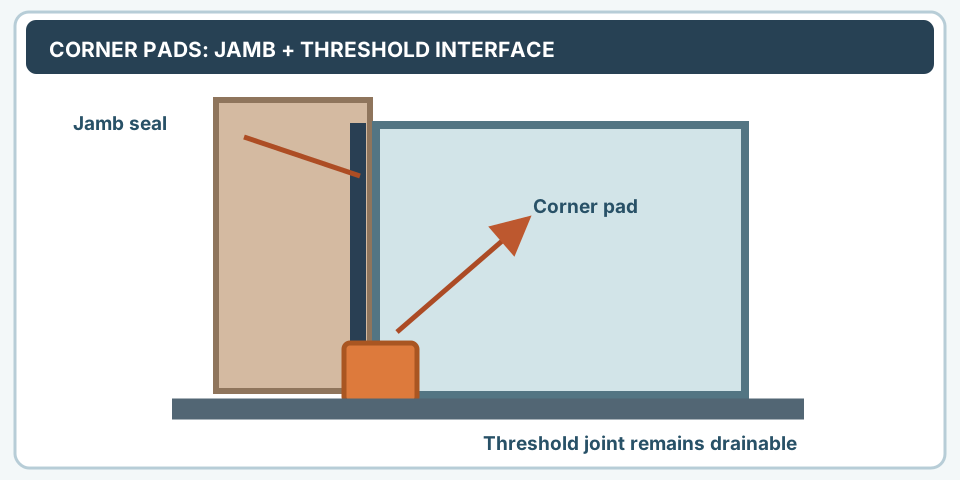 Illustrative imageDoor weatherstripping
Exterior Door Corner Seal Pads: Fix Leaks at the Bottom Jamb
Find missing inswing door corner pads, distinguish threshold leaks from weatherstrip gaps, and replace manufacturer-matched seal pads.
Read guide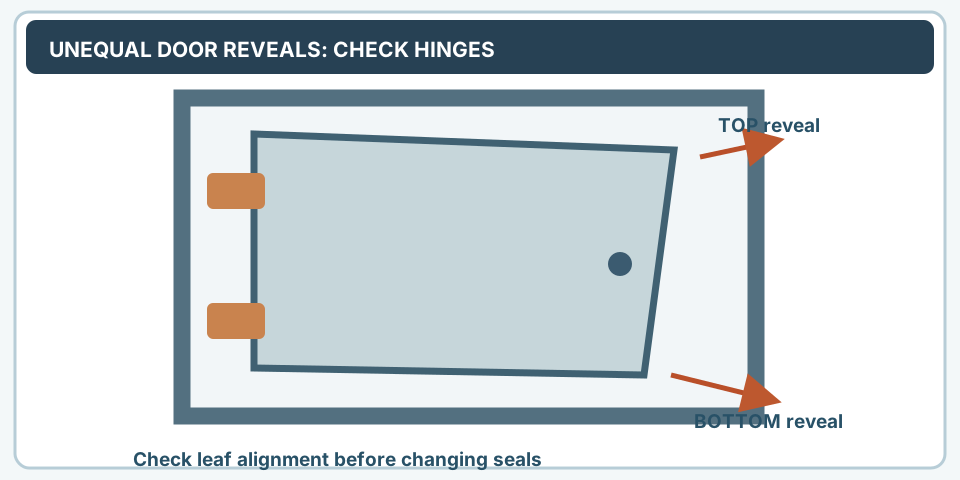 Illustrative imageDoor weatherstripping
Entry Door Sagging? Diagnose Hinge-Side Gaps Before Adding Weatherstrip
Check uneven door margins, loose hinges and latch misalignment before moving the strike plate or piling on extra weatherstripping.
Read guide