Spring roller, cordless clutch, chain and motor systems require different troubleshooting; never wind an unknown tension mechanism.
Before you buy or repair
- Record first
- Shade control type, tube label, travel limit and bracket/motor operation observations
- Make the decision
- Use product-specific service to distinguish loose spring, control fault or programmed stop
- Stop & verify if
- Spring cartridge is exposed, headrail is unstable, a shade drops unexpectedly or child safety is compromised
Jump to a section
- Diagram checkpoints
- First: classify the mechanism, not the symptom
- Inspect installation and obstructions before adjustment
- Spring-tension direction is product-specific
- A real retailer procedure shows why "add more spring turns" is risky
- Model-aware symptom diary
- Safe steps for every mechanism
- Two shades with the same symptom need different instructions
- Repair versus replace: a simple cost decision
- Safety and post-repair checks
- Decision log: diagnose the control before purchasing a mechanism
- References and limitations
- After the project: did it work?
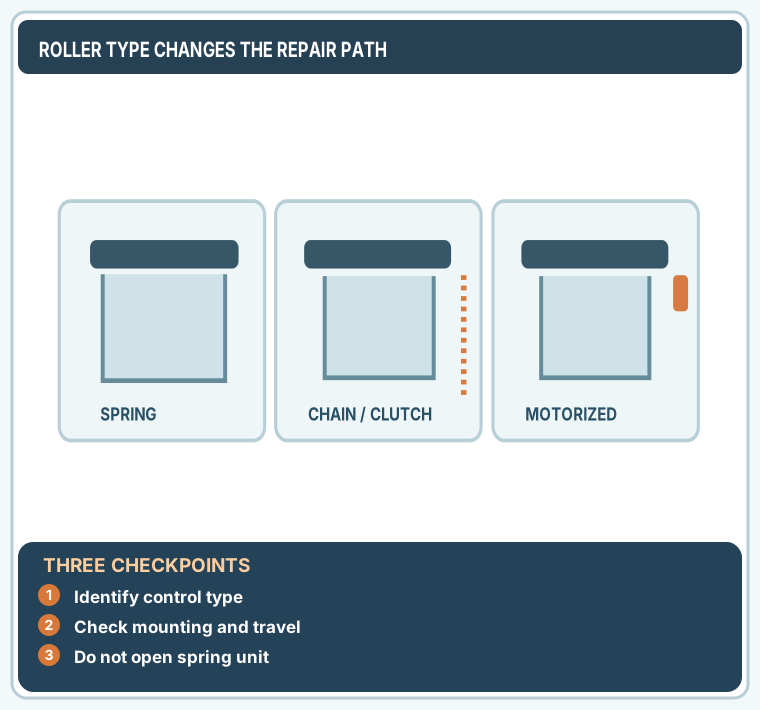
Open desktop diagram ↗ Open mobile diagram ↗
Read the diagram: three checkpoints
- Identify control type
- Check mounting and travel
- Do not open spring unit
A roller shade that no longer rises may have lost spring tension, but not every roller shade uses a serviceable spring. Cordless rollers, bead-chain clutch shades, motorized systems and traditional spring rollers have different controls. Attempting to “rewind the spring” on a chain shade or forcing a rechargeable motor can damage the product or create a child-safety hazard. Start by identifying the control.
First: classify the mechanism, not the symptom
On a narrow screen, scroll this table sideways to see every column.
| Shade type | How it is normally operated | What to check first |
|---|---|---|
| Traditional spring roller | Pull to release and raise; catches at certain positions | Bracket seating, spring action, latch behavior |
| Cordless lift roller | Move bottom rail by hand; internal controlled tension | Manufacturer-approved adjustment dial or support |
| Beaded chain/clutch | Continuous chain moves tube | Chain/tensioner integrity, clutch, track clearance |
| Motorized roller | Remote/wand/app or wall switch | Power, programmed limits, paired controller, obstruction |
| Dual/zebra shade | Two layers of banded fabric | Special control and fabric alignment; do not copy generic roller steps |
Blinds.com's roller repair guide explicitly directs owners of beaded-chain or cordless shades to service support for certain “won't roll up” faults. The exact design determines whether a homeowner-adjustable spring is present.
Inspect installation and obstructions before adjustment
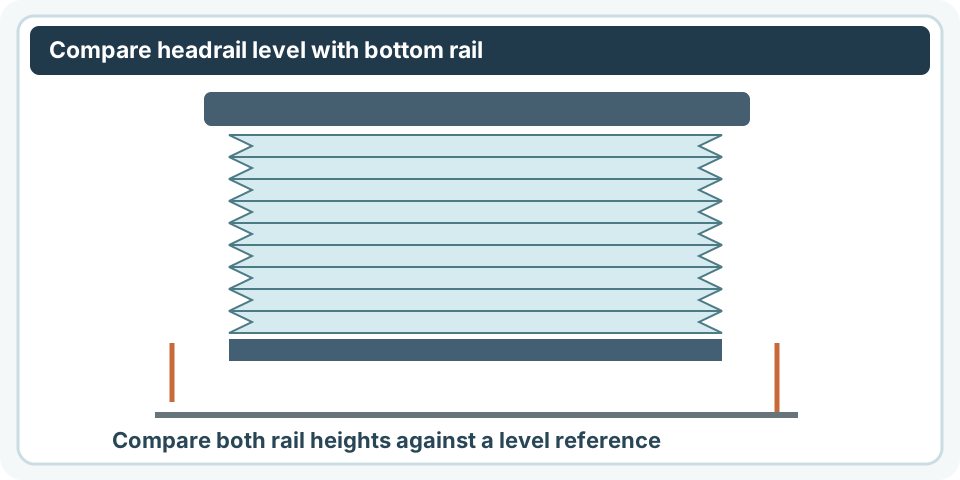
Keep furniture clear of the shade. Check whether the roller tube has disengaged from one bracket, a valance rubs the tube, the bottom rail catches a window handle, or the fabric has rolled unevenly against an end cap. If the tube is hanging from one end, stop operating it until the mounts are secured.
For a traditional spring roller that comes down but stays down, compare normal latch/catch behavior with the product manual. If it won't stay down and snaps upward, that can indicate the opposite tension problem from one that won't rise.
Spring-tension direction is product-specific
A conventional spring roller may have a service procedure where tension is increased after carefully removing the roller and re-rolling fabric by hand. But the manufacturer must establish which tube end and roll direction apply; some models use an adjustment dial and should remain installed. The Blinds.com guide describes reducing tension when a shade rises too fast or will not catch. Its current guidance sends beaded-chain and cordless models that do not rise fully to service support. That is not an instruction to add spring turns to an unidentified shade.
Never unwind a spring assembly beyond its specified travel, open a sealed spring cartridge, or improvise winding turns. Springs can store substantial energy and components may release suddenly.
A real retailer procedure shows why "add more spring turns" is risky
The Blinds.com roller-shade troubleshooting page describes a different condition from an underpowered spring: a spring roller that rises too fast or will not catch. For an applicable traditional spring model it says to reduce, not increase, tension. Its example involves removing a shade from brackets, unrolling approximately 18 inches by hand and reinstalling; this is a retailer procedure for compatible models, not a safe default adjustment for every roller shade or an instruction to handle a loaded spring cartridge.
On a narrow screen, scroll this table sideways to see every column.
| What you observe | Direction of the diagnosis | What to do without disassembly |
|---|---|---|
| Blind rises too fast or fails to stay lowered | The referenced retailer treats this as a possible excess-tension or catch fault | Identify spring roller SKU and current maker's permitted reduction/service method; do not add tension |
| Blind stays down and does not rise normally | Could be insufficient tension, catch/drive damage, bracket interference or a different mechanism altogether | Record control type, whether tube turns freely during safe ordinary operation, and seek matching product repair method |
| Beaded-chain/cordless model does not rise fully | The same Blinds.com article refers these types to support | Do not copy the spring roller's approximately 18-in hand-unrolling sequence |
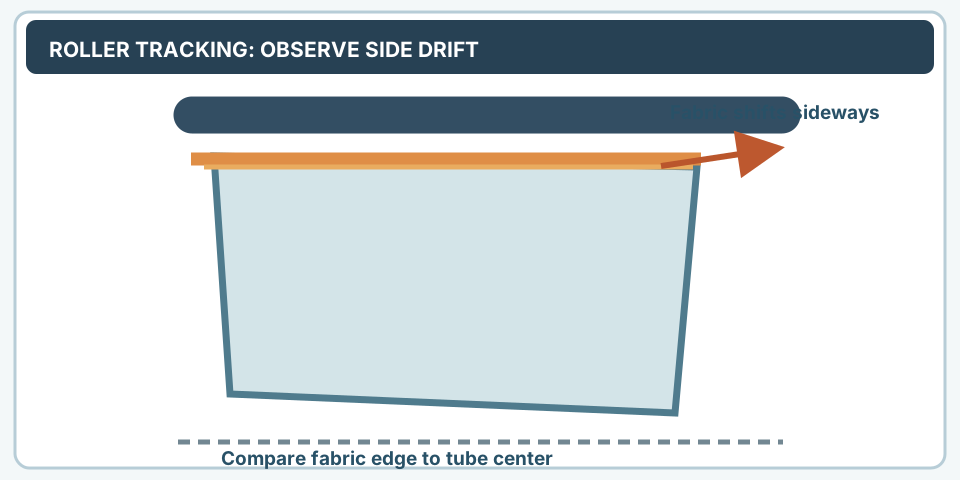
| Shade starts to telescope sideways but has normal rise | A tracking fault is different from tension/catch | Follow fabric tracking diagnosis and check bracket level before tape or spring work |
Two opposite conditions must never share one "reset": If the shade shoots upward and will not catch, mechanically adding more tension may make the symptom and stored-energy risk worse. If it stays lowered, blindly following a tension-reduction example may make it even less able to rise. Observe which direction fails first, check secure brackets and get the correct product documentation before undertaking any manufacturer-sanctioned adjustment.
Model-aware symptom diary
Suppose a shade formerly rose 54 inches but now rises only 18 inches; that observation does not establish how many spring turns are missing. Record whether the bottom rail moves smoothly for those 18 inches, whether the stop point repeats, whether the tube is centered and whether the shade will hold a lowered position. Motorized units may stop at a programmed limit rather than lack mechanical tension.
A short video showing control type, attempted raise, stopping point and bracket seating is more useful to the manufacturer than a guess about the spring.
Safe steps for every mechanism
- Photograph headrail label, both brackets, control and any safety/tensioner device.
- Check that the mounting substrate and brackets are sound, with no loose screws or damaged plastics.
- Remove visible obstruction from the normal path and test only with low force.
- For a motorized shade, use the maker's published charging, battery, pairing and limit procedure; do not pull it manually if prohibited.
- For cordless or chain shades, confirm the product-specific troubleshooting method before changing tension or disconnecting hardware.
- For a serviceable traditional spring shade, only follow an exact OEM instruction that identifies safe removal, controlled rewrapping and reinsertion.
- Test the approved rise/lower travel, stopping behavior and final clearance; stop if the product snaps, slips or drops unexpectedly.
A different fault—fabric tracking sideways—needs the roller shade telescoping guide, not more spring tension.
Two shades with the same symptom need different instructions
The phrase “roller shade won't roll up” is insufficient to identify a repair. Compare what the actual control does:
On a narrow screen, scroll this table sideways to see every column.
| Observed shade and symptom | What the manufacturer may allow | What not to transfer |
|---|---|---|
| Traditional serviceable spring roller, shade comes down but will not return | The exact product manual may document a controlled rewrap/remount of the tube | Never copy a guessed number of spring turns; do not work with an exposed damaged spring |
| Traditional spring roller, shade rockets upward and will not stay down | This can be the opposite tension condition, so confirm the approved decrease procedure | More tension is not a universal cure |
| Beaded-chain roller, chain moves but tube stops | Check brackets and control/chain under its original manual; request service for a clutch fault | The spring-roller removal/rewrap sequence is inapplicable |
| Cordless roller with documented adjustment dial, shade creeps downward | Some named models provide an external tension dial and an exact operating position; confirm that specific instructions first | Never assume every cordless shade has a dial or move a hidden spring clip |
| Motorized roller, stops at the same height | Record power state, pairing/status and programmed limits in its own manual | Do not pull motorized fabric to simulate a manual reset |
Blinds.com's roller repair guide sends many corded-chain and cordless incomplete-rise cases to service support rather than prescribing one spring adjustment. Its advice for a traditional spring roller that rises too fast or fails to catch is also different from an incomplete-rise problem. This distinction matters more than purchasing an aftermarket “universal roller spring.”
A practical pass/fail inspection at three positions
Before trying any adjustment, mark the low, middle and high position the shade can reach without extra force. Record whether it rises by its normal control, holds each position, rubs at an end cap, or suddenly drops. If the headrail/brackets move, the chain tensioner is insecure, or a spring is exposed, stop before cycling it further.
After a manufacturer-authorized procedure, repeat only the normal operation. Successful behavior is smooth travel, intended stopping/holding and sound mounting; failure includes new drift, snapping, heat, rubbing or damaged cord/chain protection. The notes should record the shade model, not a fictional universal number of turns.
Repair versus replace: a simple cost decision
Compare the exact manufacturer service quote, replacement part availability, labor to access tall windows, warranty and risk of failure. A loose mounting bracket may be repairable without changing the roller; a damaged spring cartridge may require replacement under warranty. Request a quote for your exact part and include shipping, installation and any access equipment before comparing repair with replacement.
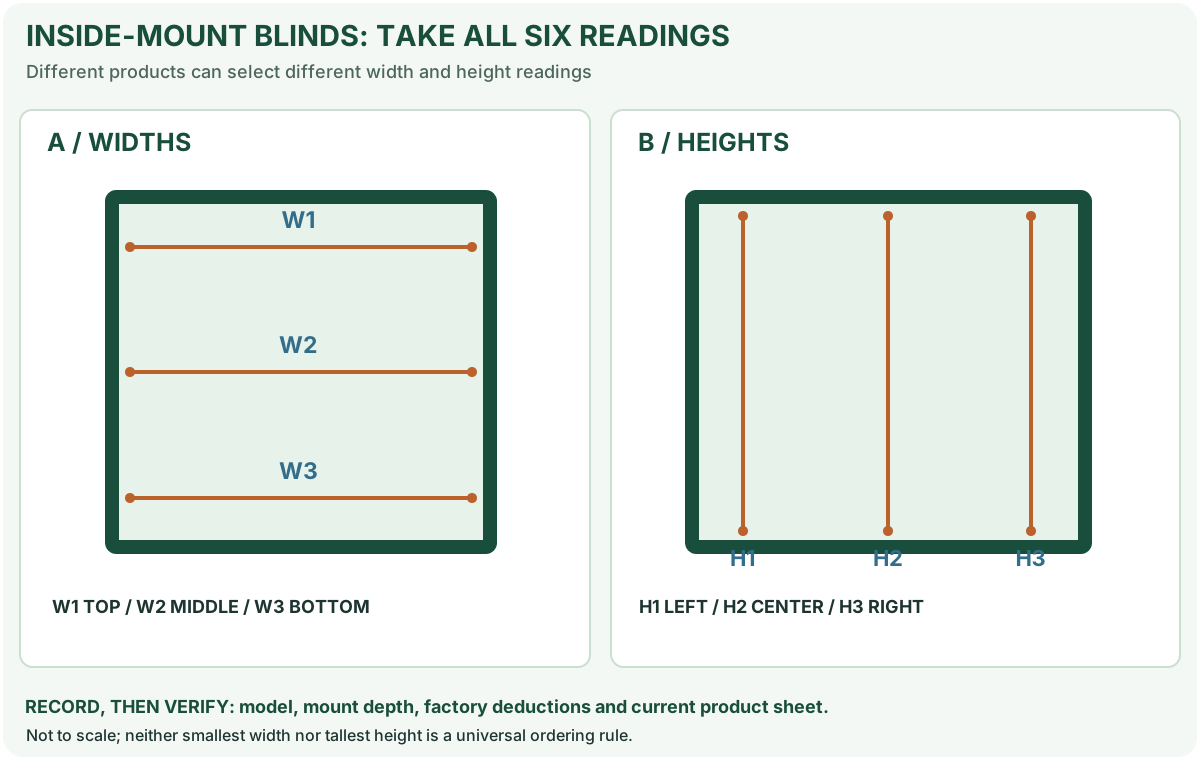
If purchasing a replacement, record the original installed tube/valance dimensions separately from the ordered shade size; follow inside-mount measurements or outside-mount planning for your new product type.
Safety and post-repair checks
Looped chains and cords require compliant tensioning and child safety. Do not cut safety devices, leave exposed cords or work on a falling headrail. If the shade accelerates uncontrollably, an internal spring is visible or a motor heats abnormally, stop and contact the manufacturer.
For an approved repair, run several complete gentle cycles and verify the shade holds its intended position. Record any new noise or drift. Save the control type, stopping height and result in your project notes so you can compare them if the fault returns.
Decision log: diagnose the control before purchasing a mechanism
Record a product label or installation manual before trying to restore tension. A spring-roller tube, a clutch-and-chain shade, and a motorized shade do not share one universal adjustment procedure.
On a narrow screen, scroll this table sideways to see every column.
| Control identified | Safe external observation | When to stop |
|---|---|---|
| Spring roller | Does the shade fail to hold a position, or stop before the intended travel? | Sudden uncontrolled winding, damaged bracket or exposed spring |
| Beaded-chain clutch | Does the chain turn while the tube stays still? Is the required tensioner fixed and intact? | Broken child-safety hardware, chain entanglement or a loose headrail |
| Cordless mechanism | Does the shade rise evenly, drift down or stop asymmetrically? | Visible internal mechanism damage or unsupported tension adjustment |
| Motorized control | Is the power/control source connected, and is there a documented limit or fault indication? | Heat, damaged wiring, instability or a procedure requiring live electrical work |
The CPSC recommends cordless window coverings where young children are present because accessible cord loops can be lethal. UK readers should separately check the OPSS cord-safety guidance for their market. Do not trade safety for another cycle of use.
Useful manufacturer support request: “Model/series: __; control type: __; installation orientation: __; failure: stops / drifts / won't start; visible obstruction: __; mounting bracket condition: __. Which manufacturer-approved troubleshooting step and replacement part apply?” Attach photos only if they do not reveal personal information. This makes a support reply actionable without assuming the fault is a spring.
References and limitations
- Blinds.com: How to repair roller shades.
- Blinds.com: Window treatment repair index.
- Blinds.com: Measuring instructions for a replacement product.
This is a diagnostic resource, not a guide to opening a spring mechanism. Use the exact manufacturer's instructions for any adjustment.
After the project: did it work?
After completing only product-approved work, document what you actually observe instead of assuming a replacement part resolved the fault.
- Success looks like
- The identified control lifts and lowers through its permitted travel, holds position and stays secured in brackets.
- If it still fails
- If a shade snaps, drops or an internal spring/chain tensioner is damaged, stop and request product-specific service.
- Keep for next time
- Operating system; safe travel height; observed fault; final hold test
Keep your actual measurements and observed result in your private project notebook. This is a verification checklist, not a product certification.
My project record: progress and take-home checklist
Select a progress stage if helpful. This is a personal record only, not a claim that MendNook verified your repair.
Includes this guide's specific diagnosis, decision, safety, and outcome checks, plus any note entered above. Nothing is sent to MendNook; downloads and copy operations stay under your control.